The video talks about what is Cyberpunk:
https://www.bilibili.com/video/BV17r4y1c7to/?spm_id_from=333.337.search-card.all.click&vd_source=e13b14061d69c0d82b2f30c91181db76
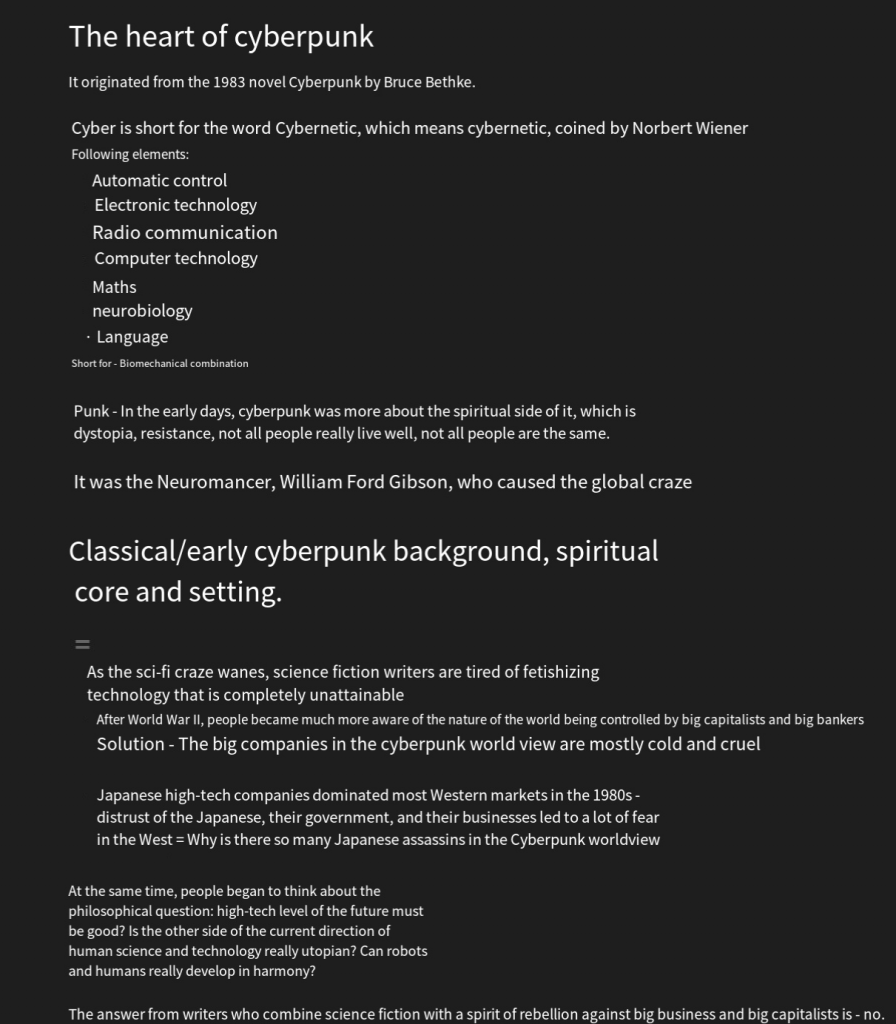
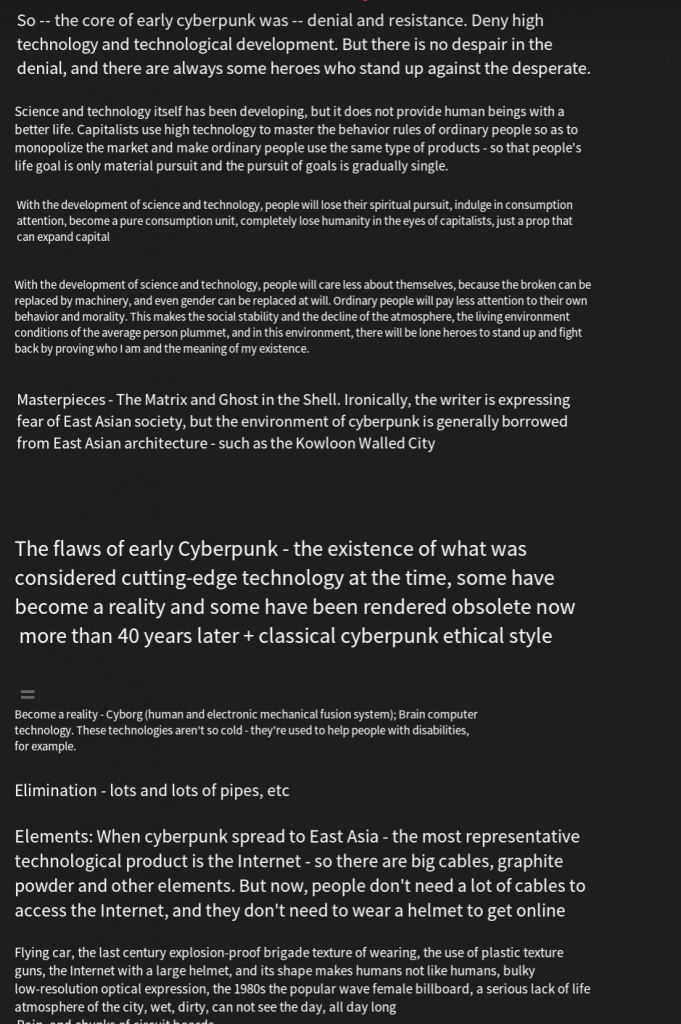
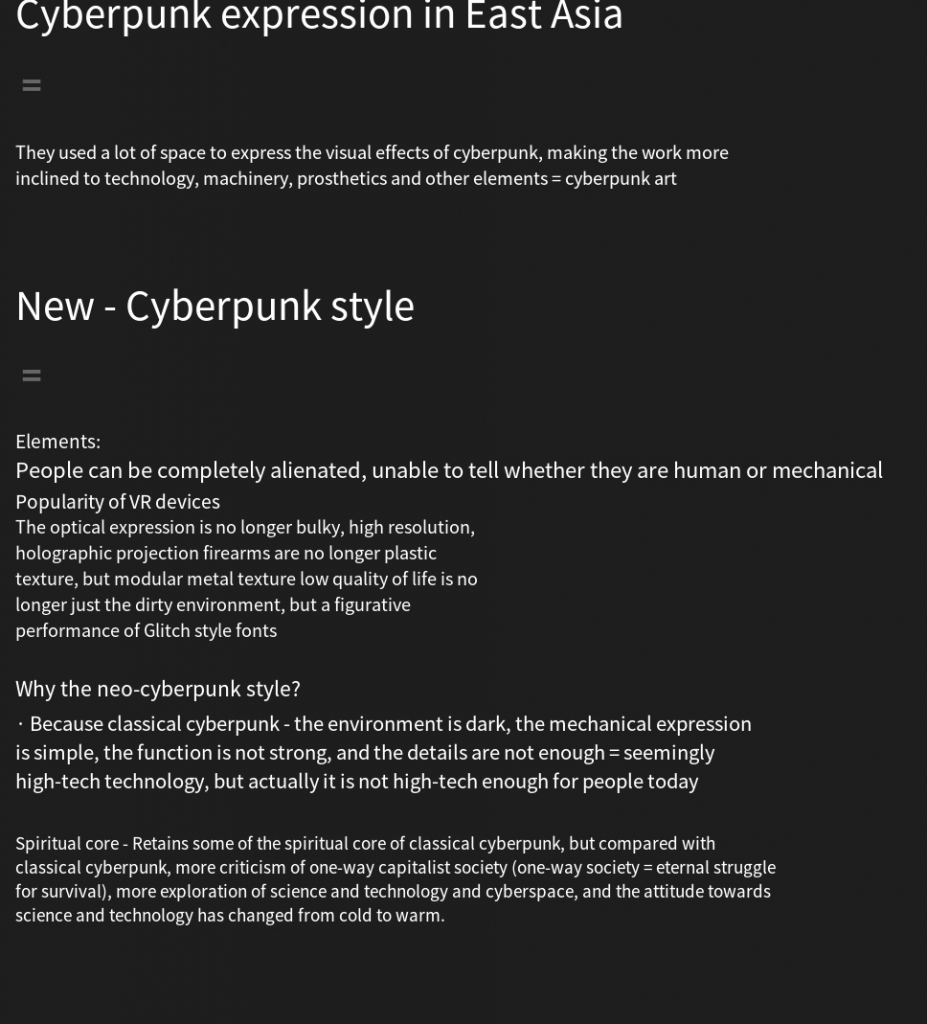
Notes I’ve taken from the video (it was originally in Chinese since the video is in Chinese, I used a translator to auto-translate it and took screen shot on my notes (≧∇≦)ノ):
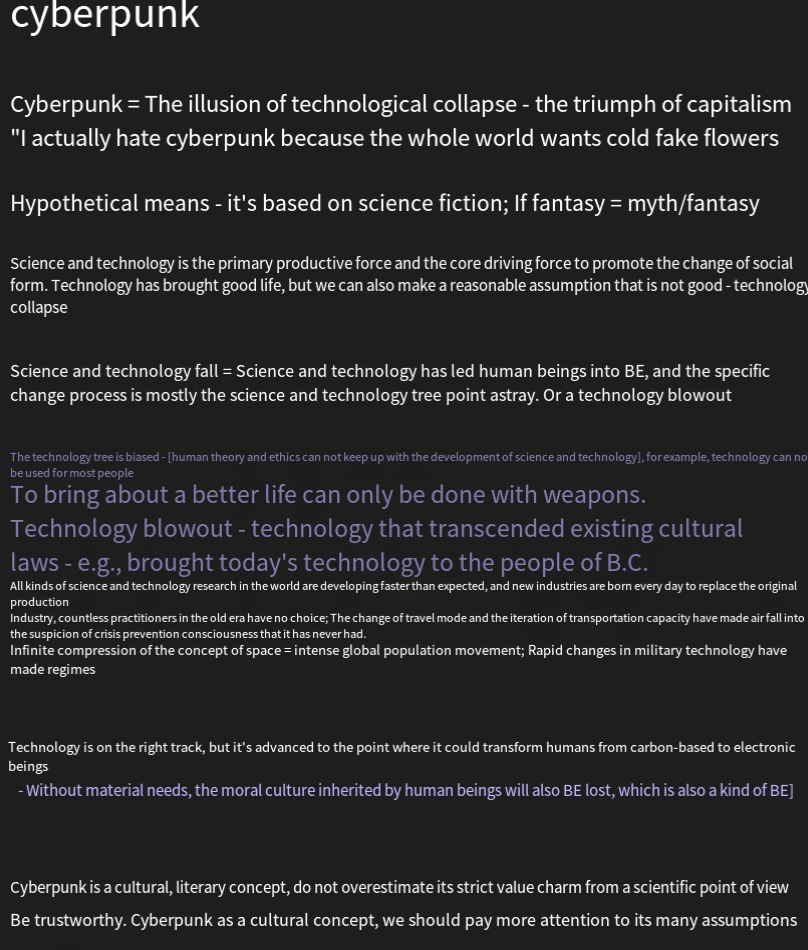
And, another video talks about what is Cyberpunk in the video creator’s view:
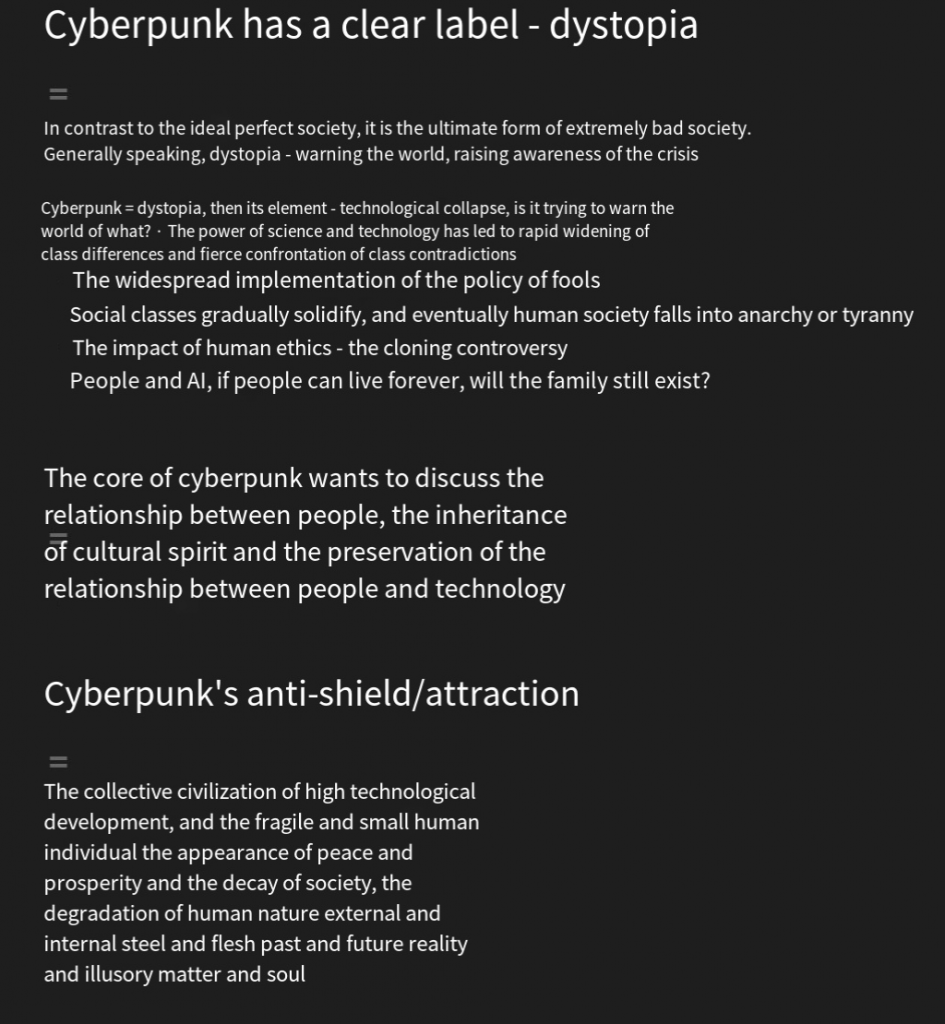
My personal perspective on this theme (for these two videos):
Before watching videos, the only thought I had on Cyberpunk was, a type of art style that is 1. in a future world, 2. depicts a colourful life that most people indulge in, 3. severe differences between each class. The main impression of cyberpunk is neon light and the vibrant colour artists use when creating cyberpunk-style artworks.
After watching these videos, I think the key thing for cyberpunk is never its art style, it is its core idea of rebellious spirit – people/creatures full of resistance united together and against a flourishing society that is trying to materialise people/creatures. I want to somehow show this core idea in my artwork – maybe putting things that symbolise rebellion or the wilderness/rebel inside human nature like graffiti?
Also, the research on cyberpunk inspired me to start to re-think the contrast between each element I might be interested in, like ghosts and humans? I think ghosts are dead humans, humans are living ghosts, and they are like two sides of a coin, what will they behave if they live in the same city? Collisions, riots, living with each other peacefully, or like…peaceful at the surface, riots and darkness hidden in the deep?
Flims
Ghost in the Shell (2017)
(part of the screenshots on Obsidian – I took too many screenshots XD)
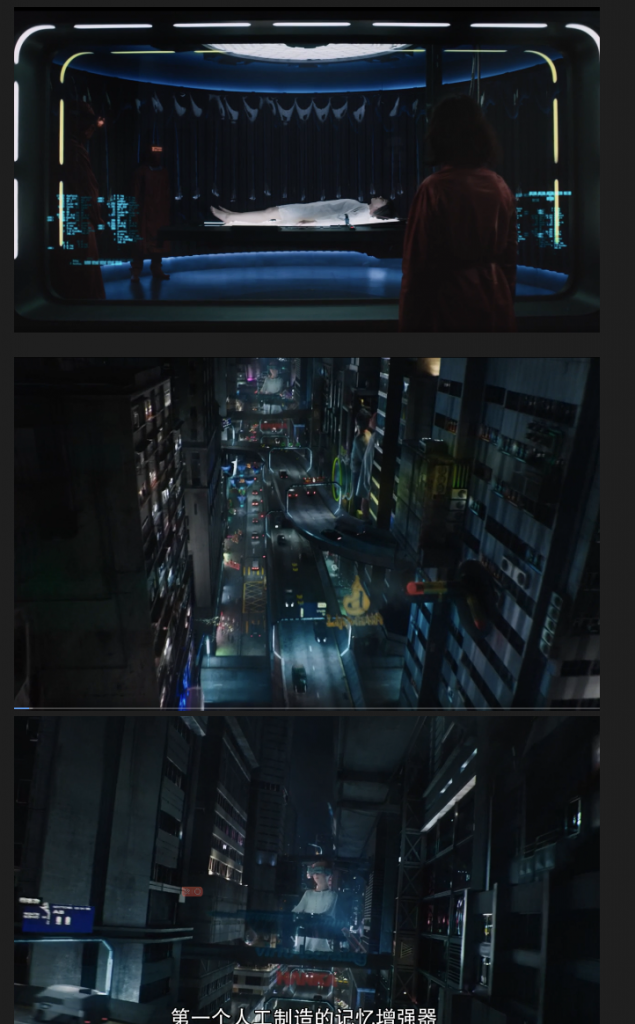
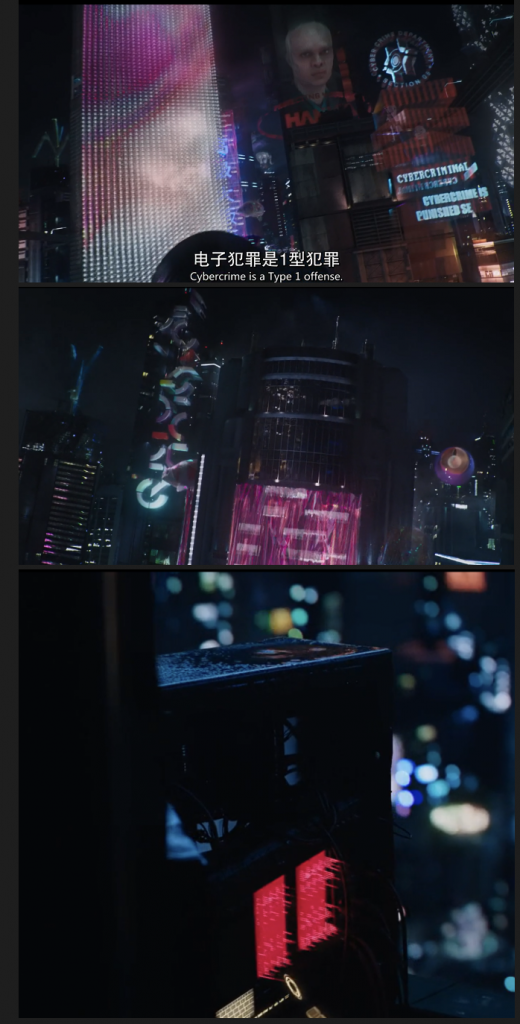
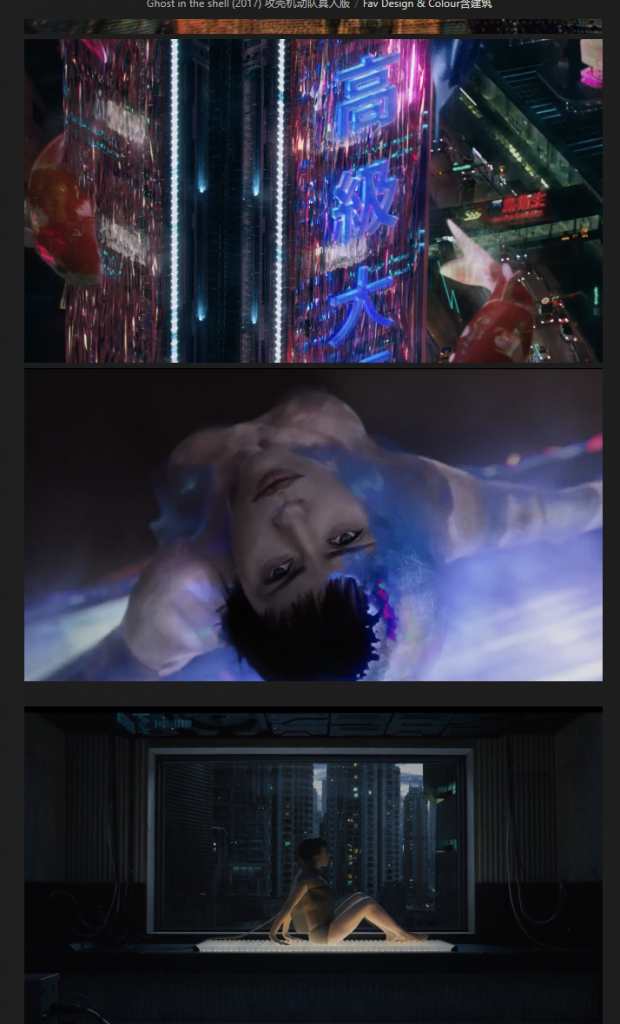
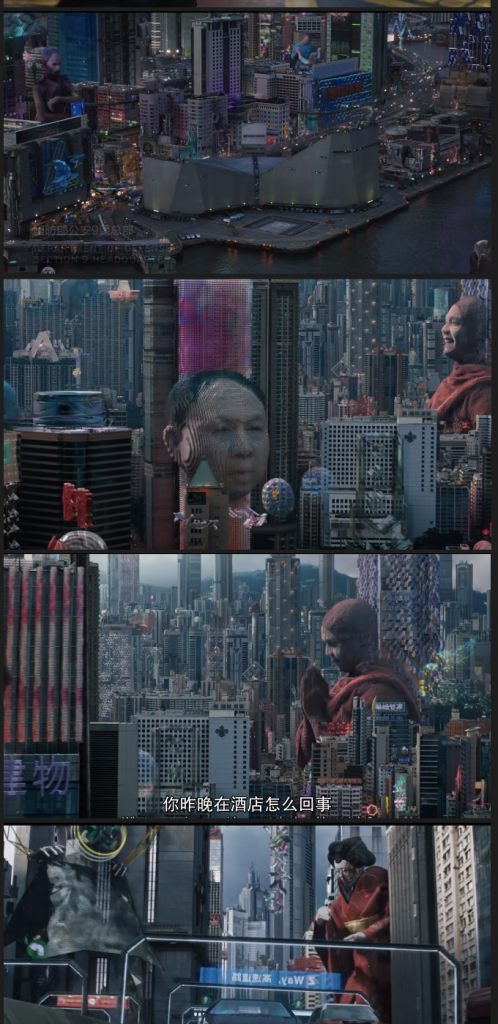
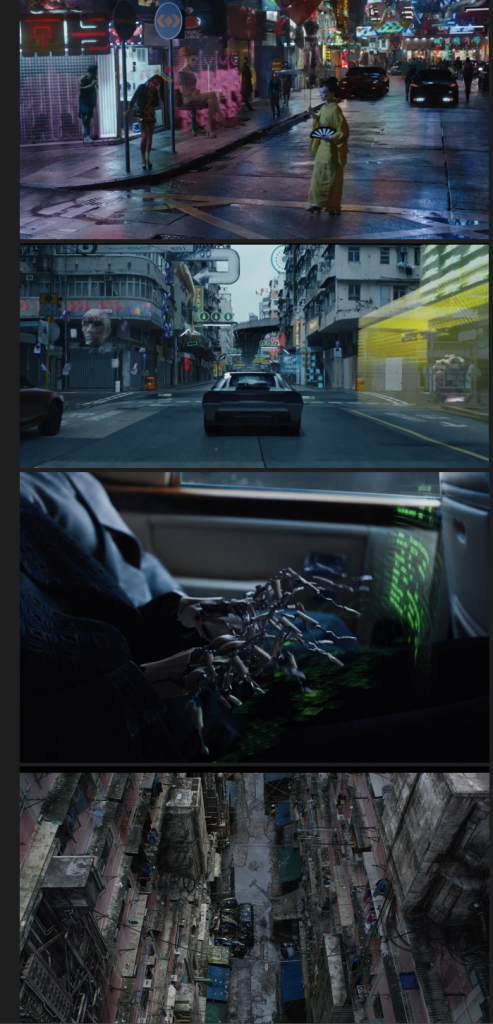
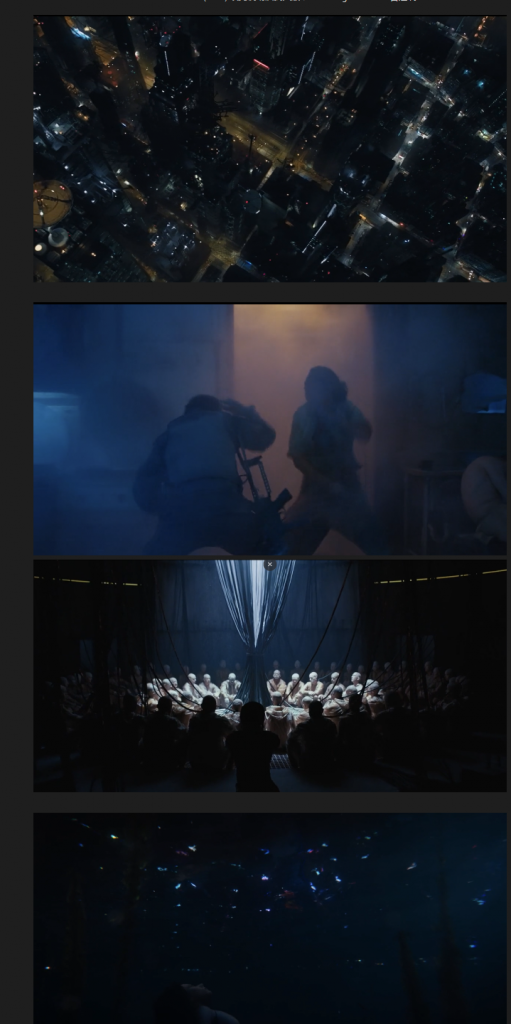
The perspective in this scene perfectly fulfils my dreams of a cyberpunk city. I really love the vibrant, multicoloured aesthetics and the glitch/simulated holographic advertisements—they look incredibly futuristic and surreal.
(As for the plot: I feel that the ending isn’t as shocking or profound as the 1995 original. While it’s touching that the protagonist reunites with her mother, an open ending would have given the audience more room for imagination. Plus, the ending feels a bit too much like a typical Hollywood blockbuster.)
Metropolis (1927)
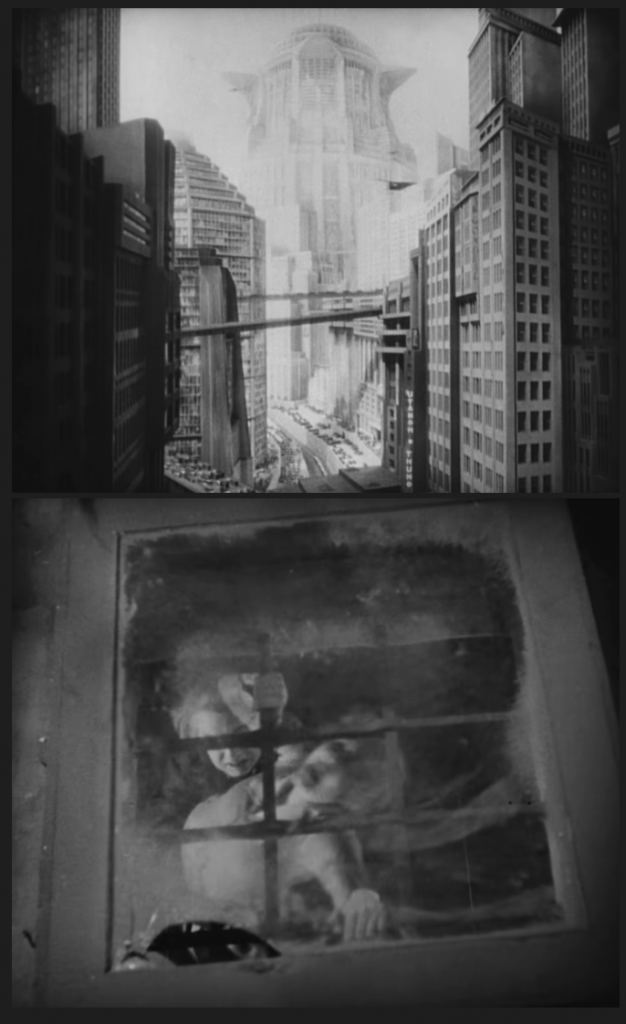
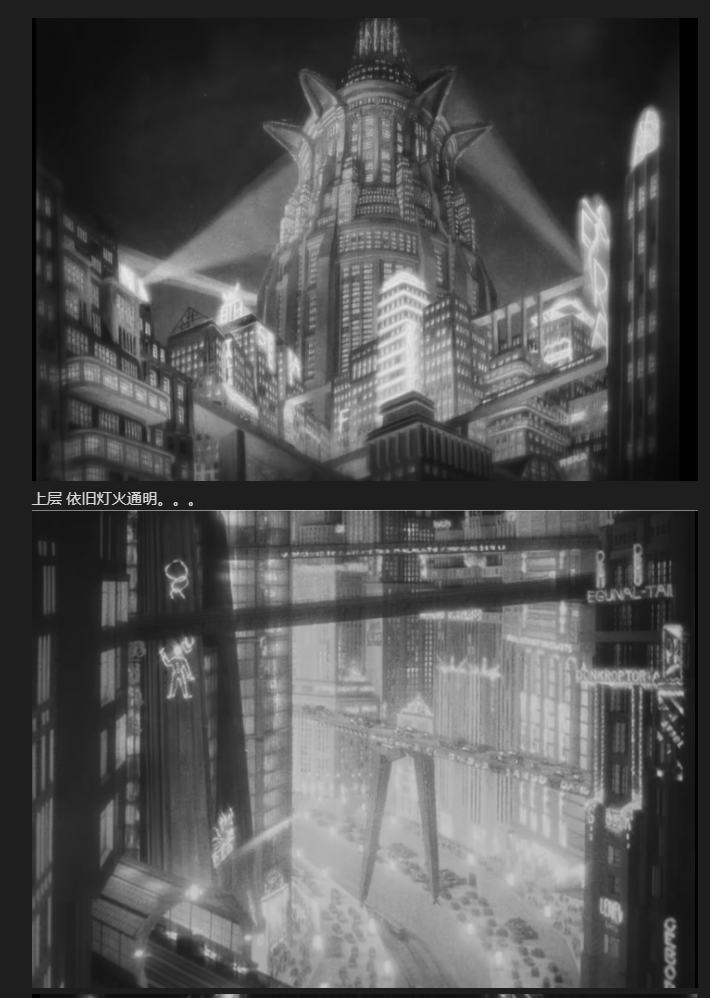
I absolutely love the design of the surface city in Metropolis. Even though it’s a black-and-white film and lacks the bold colours that we typically associate with cyberpunk, I believe it is the unique structures of the architecture stand out—the geometric aesthetics, the abundance of aerial designs, and the layered, intricate layout.
In fact, the elevated railways in Metropolis and the stark contrast between the surface and underground worlds inspired my own idea: the world of ghosts = roads on the ground, while the human world = roads in midair. This distinction makes their separation even more pronounced.
As for the plot, I feel it carries a very strong religious undertone, with references to the seven deadly sins and embodiments of evil. Overall, it’s an incredible film! If you enjoy the fusion of religious themes and futuristic cityscapes, I highly recommend it.
Blade Runner 2049 (2017)
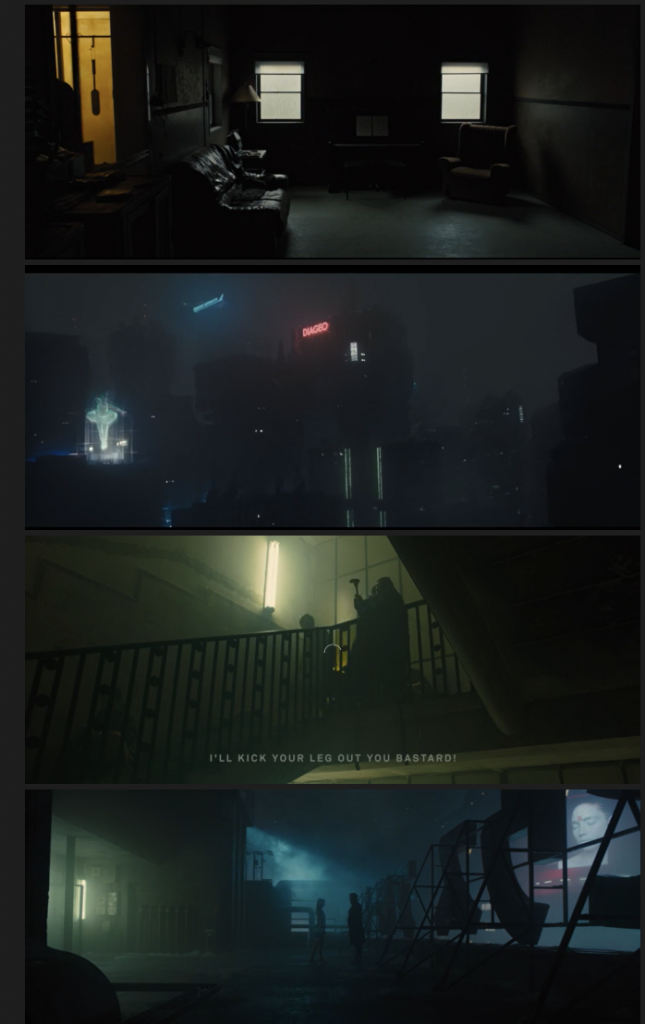
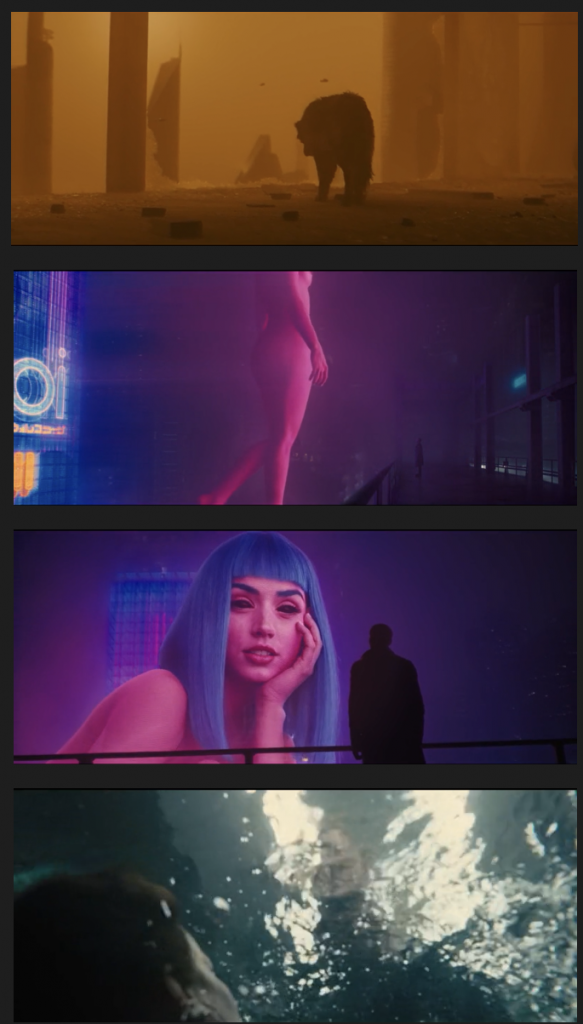
Compared to Ghost in the Shell, where many scenes showcase the city’s prosperity, modernity, and vast scale, Blade Runner presents a cyberpunk society shrouded in mist—an oppressive world defined by high-tech + low morality. I really love the use of fog; it feels like a literal mask over the entire society. Artistically, it adds depth, and conceptually, it reinforces the idea that the city is gray, veiled, and seemingly advanced yet far from utopian. I think I’ll try incorporating the idea of mist into my own work to express similar themes.
I also absolutely love the image of the giant AI woman on the massive screen—such a strikingly futuristic moment. The sheer scale of the projection not only enhances the scene’s visual impact but also makes it easier for the audience to take in the details. If I could include advertisement boards in my own settings (which seems almost inevitable, given that cyberpunk worlds are inseparable from neon screens and advertisements), I think I’ll go for a gigantic character display rather than a smaller, less discernible one.
As for the story: Unlike the first two films, which explore grand philosophical themes—such as the relationship between machines and souls or the morality of the soul—this one focuses intensely on the protagonist’s psychological transformation. The rebellion serves as a secondary thread, but it’s ultimately driven by the protagonist’s internal journey. It’s an incredibly well-crafted film—deeply captivating and overwhelmingly oppressive.